
PICTURES BY MIRELLA MONESI
Pencil drawings on cardboard for watercolours. Colour spread with marten brushes and liquid acrylic colours. Some parts of the background were made with the airbrush technique, creating cardboard “masks” and films.
FATRO calendar 2026
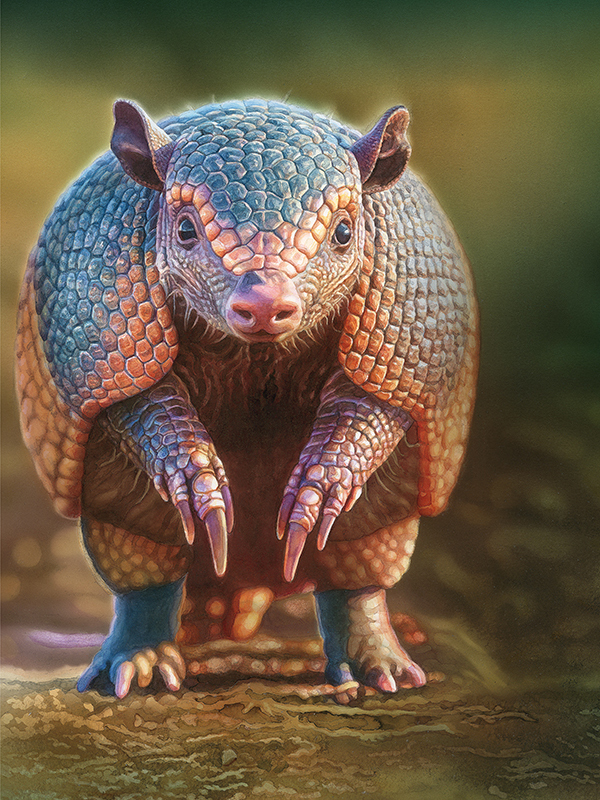
ENDANGERED SPECIES Dasypus novemcinctusFATRO “WILDLIFE” COLLECTION The common armadillo or nine-banded armadillo is a mammal belonging to the Dasypodidae family, widespread in central-southern America. Its weight ranges between 5.5 and 7.5 kg and its length ranges between 60 and 80 cm. It has a powerful armour, divided into nine keratin scales, connected with each other by thin layers of skin, which form a hard and flexible protection, useful to protect it from predators and obstacles. If it is threatened, it coils up, acquiring an almost spherical shape. It lives in woodlands, prairies and humid areas, where it eats insects, snails, earthworms, fly larvae and other small invertebrates. It is normally a lonely animals, active at dusk and at night. During the day it hides in deep lairs in the ground, which it digs out with its long claws. Gestation lasts about 2-3 months and generally 4 puppies are born. The survival of several species, including the giant armadillo and the three-banded armadillo, is currently at risk, due to uncontrolled hunting and invasion of their habitat. DOWNLOAD PDF
Read more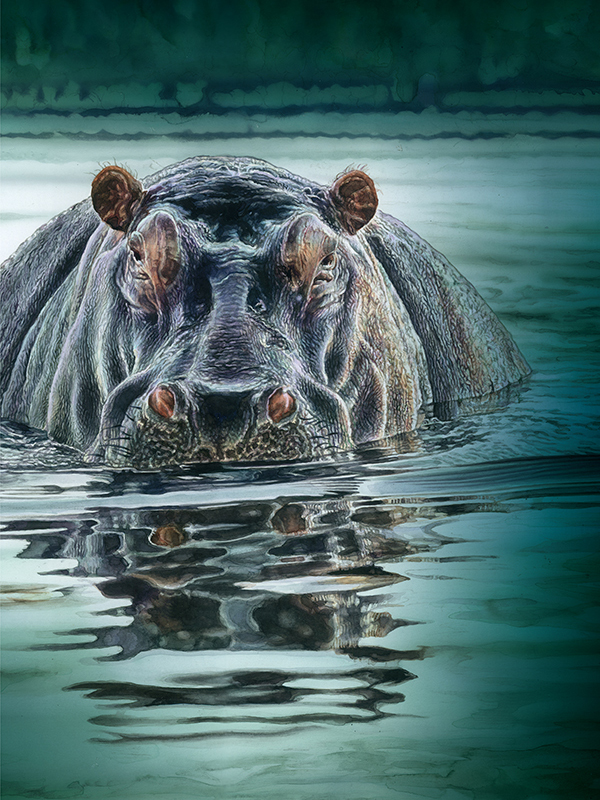
FATRO calendar 2025
ENDANGERED SPECIES Hippopotamus amphibiusFATRO “WILDLIFE” COLLECTION The hippopotamus is a large African herbivorous mammal. The origin of its name dates back to ancient Greece, when it was called “river horse”; indeed, it cannot swim, but it “gallops” on the bottom of rivers. It is one of the two species of the Hippopotamidae family which are still in existence (two more went extinct recently). Its length varies from 3 to 5 metres in adult males and its height at withers is 150 cm; on average, its weight is around 1,500 – 1,800 kg, but old individuals over 3 tons are not rare. Its large eyes, its nostrils and its small and mobile ears are located in the upper part of the muzzle and are at the same height, enabling the animal to remain flush with the water and control its territory. When it dives in, its nostrils and ears close. Adults have between 36 and 40 teeth. Their canines, sharp and pointed, grow constantly and can reach a length of 50 centimetres and a weight of 3 kg in males and 1 kg in females, which make them very effective weapons.Male hippopotamuses do not mate before the age of 6-13, females are not receptive until the age of 7-15.Due to climate change and the spreading of agriculture, their density has lowered noticeably. DOWNLOAD PDF
Read more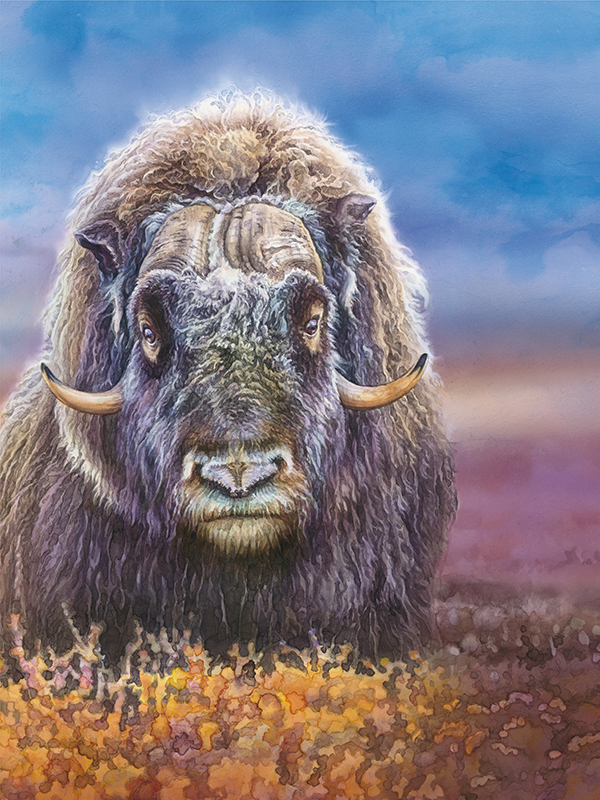
FATRO calendar 2024
ENDANGERED SPECIES Ovibos moschatusFATRO “WILDLIFE” COLLECTION The muskox is an arctic mammal, known for its thick fur which almost reaches the ground and its typical musk smell. It belongs to the subfamily Caprinae, therefore it is related with both the domestic goat (Capra hircus) and the ox (Bos taurus). It lives in Greenland, Canada and Alaska and it was recently reintroduced in the mountains between Norway and Sweden. During the summer, it lives in wet areas, especially river valleys, whereas in winter it moves to higher places. It eats grass, roots, sedges and other land plants. Adults may reach a height of 150 cm, a length of 250 cm and a weight between 200 and 400 kg; they can live for up to twenty years. In the reproduction season, males fight furious duels to conquer females. The gestation period lasts about 8 months and normally a single baby is born, which is breastfed for one year. In the past, muskoxen risked to become extinct because they were hunted massively by humans, but thanks to the efforts made to reintroduce them, their population has increased again. At the moment climate change is endangering their survival. DOWNLOAD PDF
Read more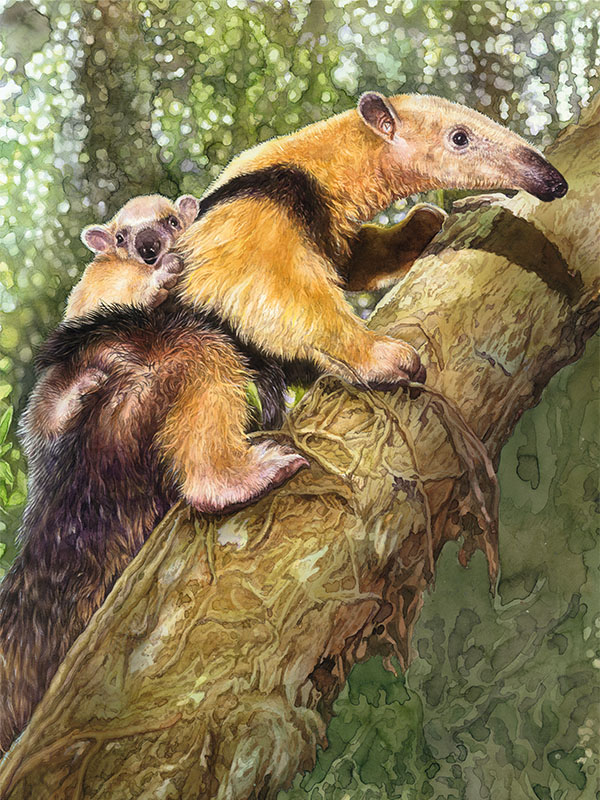
FATRO calendar 2023
ENDANGERED SPECIES Tamandua tetradactyla FATRO “WILDLIFE” COLLECTION The Tamandua lives in Uruguay, Argentina, Brazil and Paraguay. Its short and rough fur is yellowish, fading to blackish on its shoulders and on the side of its chest. It can be over one metre long and weighs between 3 and 8 kg. It eats insects, sweet fruits, honey and bees. Its paws have four claws, useful to uncover termite and ant nests, which it captures with its sticky tongue (up to 40 cm long). It is a lonely animal with a nocturnal lifestyle, which spends most of its life on trees. The female gives birth to only one pup, which she carries on her back for several month. The Tamandua is an ancient and powerful animal, which can adapt very well, despite the continuous destruction of its habitat. DOWNLOAD PDF
Read more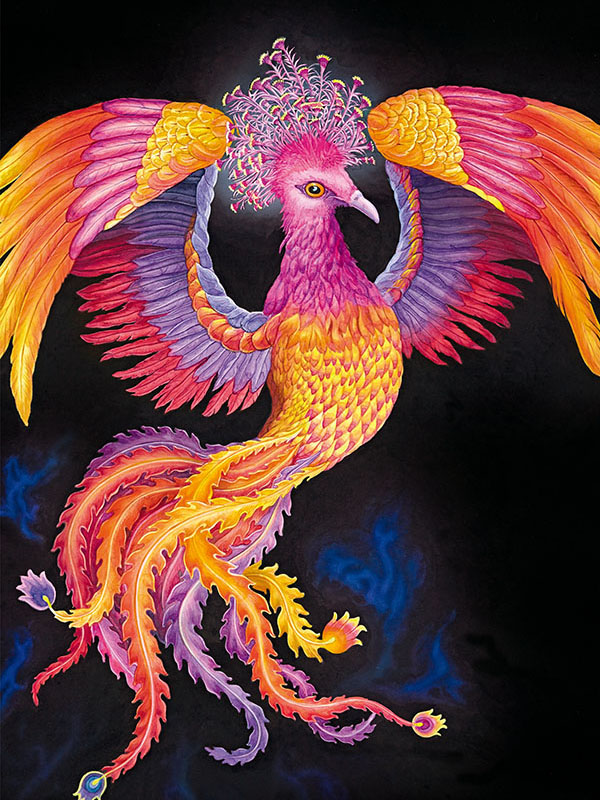
FATRO calendar 2022
PHOENIX The legend of rebirth... lives on Herodotus says that the Phoenix is a single bird with red and gold feathers, which lives for 500 years. At the end of its life, it builds a nest with rare resinous and balsamic shrubs, lies down into it and lets the sun burn it. But from these flames and ash, a new Phoenix is reborn, flying to the temple of the sun in Heliopolis and perching on its sacred tree. Carl G. Jung interprets the Phoenix as a symbol of the capacity of the human mind to recompose itself after a crisis, a mistake, or a mourning. Difficulty, pain and anxiety “burn” people inside like fire, but can set them free from negative emotions or mistaken behaviours, transform them and give them a new equilibrium that is stronger and more youthful. In this way, life can be reborn from pain and keep on evolving. The Phoenix is a very old rebirth and evolution myth, which predates Darwin’s theory: “it is not the strongest or the most intelligent who survives, but he who can adjust best to changes”. The capacity to adapt is not resignation or “passive resilience”, but rather the capacity to resist adverse events, while acquiring the skill and competence to overcome them, becoming stronger not only physically, but also in the soul, developing an “active resilience”. The Phoenix symbolizes rebirth, active resilience and the evolution of people, but also of companies, since they are made up of and led by people. In these hard times, characterized by the Covid epidemics, FATRO has carried on with its work and overcome the many difficulties which have arisen on its path. Phoenix 2022 is the way FATRO has chosen to express thankfulness to all its Employees, Partners and Collaborators. We wish them a year of active resilience, knowing that whenever and however this painful pandemic finishes, we will have a stronger mind and soul. As we have always done.Happy actively resilient 2022! DOWNLOAD PDF
Read more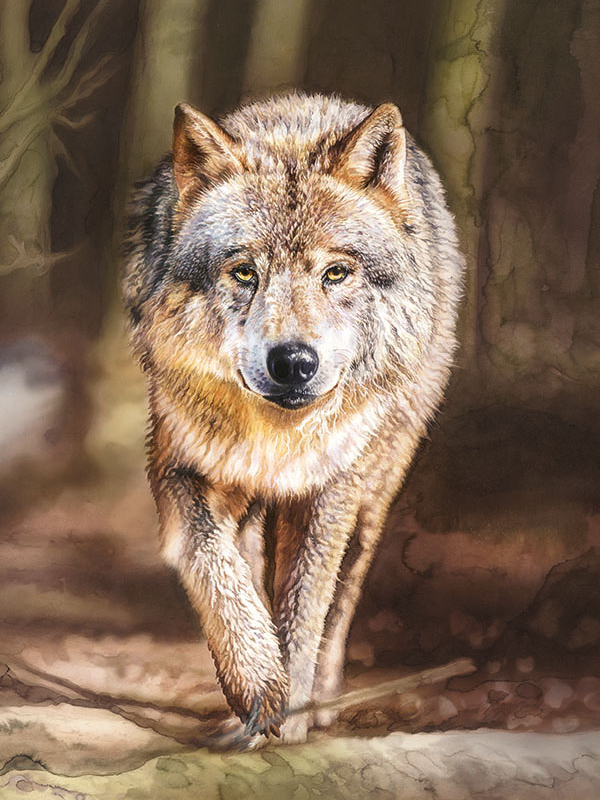
FATRO calendar 2021
2021 THE ITALIAN WOLF: BEST WISHES TO EVERYONE A success story is always the result of teamwork Each country in the world is symbolized by an animal: many have eagles, bulls and lions, others have oystercatchers, “unicorns”, red admirals, carp, and even ladybugs. The Italian national symbolic animal is the Italian wolf (Canis lupus italicus), which is also the oldest wolf species from a genetic point of view. In fact, studies of molecular biology and genetic analyses of wolves from various epochs have demonstrated that the Apennine Wolf (Canis lupus italicus) possesses a unique mitochondrial haplotype that is not shared by dogs or other species of wolf, but which is found in prehistoric wolves from the Upper Pleistocene. Contrary to the popular conception of the “big, bad wolf”, these animals live together in highly organised groups that mirror the most efficient forms of business and social structures, where the common good is the single most important factor. Discipline and team spirit, flexibility, the capacity to adapt and the ability to act rapidly combine to form a single quality: the great resilience of the wolf. In the wake of such a difficult year, and the terrible consequences of the pandemic for humanity as a whole, and Italy in particular, where Covid 19 saw the human, cultural and scientific qualities of the Italian people emerge in every walk of life, from out balconies to our hospitals, it seems only right that we should dedicate our planner and calendar for the year 2021 to our beloved Italy and its “old” wolf, a social animal capable of living and working together in groups, overcoming hardship and adversity through determination and consolidating its place, like us, both in the environment and in history. DOWNLOAD PDF
Read more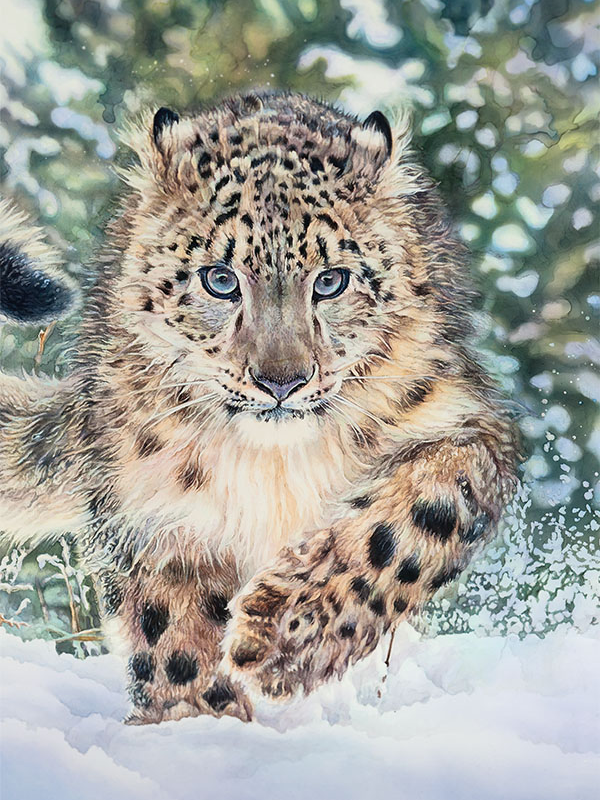
FATRO calendar 2020
ENDANGERED SPECIES Panthera uncia FATRO “WILDLIFE” COLLECTION The Snow leopard is a feline which lives in the mountains of central Asia, at altitudes between 3,000 and 6,000 metres. It weighs between 30 and 75 kg. Its thick coat enables it to tolerate very low temperatures. Its broad paws act as snowshoes, which prevent it from sinking into the snow. Its long tail (80-100 cm) also has a protective function; the leopard rolls it around its muzzle, using it as a "scarf". In less than 20 years the number of Snow leopards has decreased by over 20% and today it is estimated that fewer than 7,000 remain. The greatest threats to the existence of this feline are the loss of its habitat, poaching and the climate change which is threatening the future of the mountains where it lives. DOWNLOAD PDF
Read more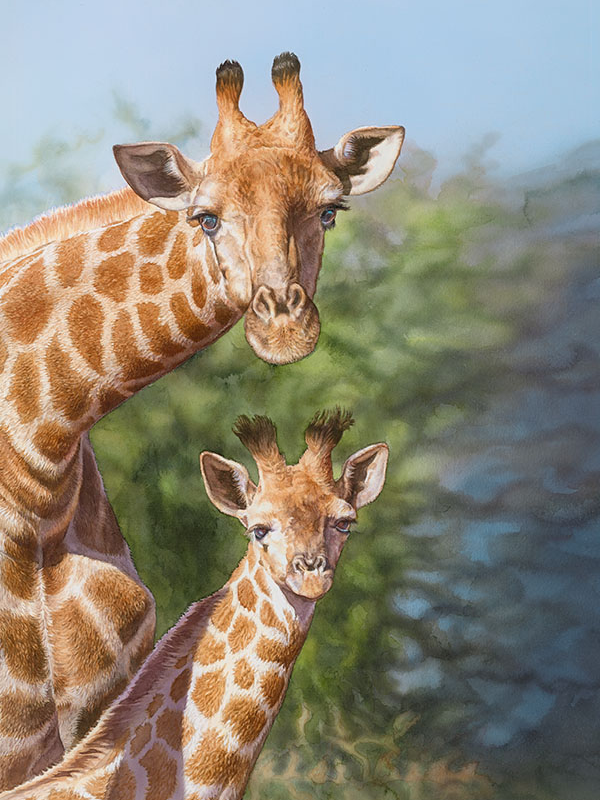
FATRO calendar 2019
ENDANGERED SPECIES Giraffa camelopardalis FATRO “WILDLIFE” COLLECTION The giraffe is the tallest mammal in the world. The largest populations are found in Eastern and Southern Africa. Their main source of food is acacia leaves. Males reach 5.7 m in height, while females are around one meter shorter. Pregnancy in the giraffe lasts for 15 months. The mothers isolate themselves for calving, after which they return to the group and cooperate with the other females in rearing the young and protecting them from the attacks of predators. They can live for up to 10-15 years. Over the last 30 years, poaching and the destruction of their habitat has caused a 40% decrease in their population. DOWNLOAD PDF
Read more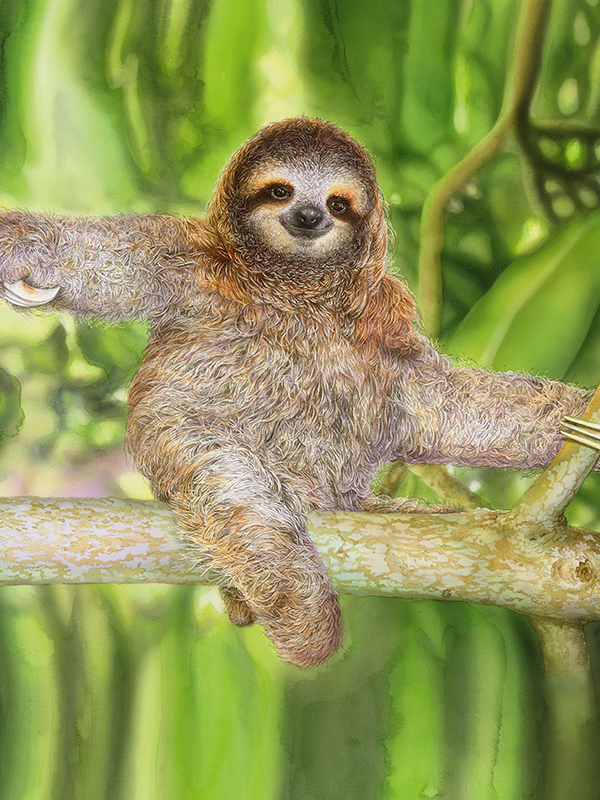
FATRO calendar 2018
ENDANGERED SPECIESBradypus variegatusFATRO "WILDLIFE" COLLECTION The brown-throated sloth is a delightful animal which lives in the rain forests of Central and South America. It eats leaves, fruit and shoots which it finds in trees and satisfies a good part of its water needs from the lymph of the plants. However, there is a difference between males and females: while the males choose just one tree as a home for their entire lives, the females leave the tree to their young, once grown. The brown-throated sloth is famous for its slowness, although in water it is an excellent swimmer and can become quick and aggressive in situations of danger. Sloths are in decline owing to the loss of their habitat, caused by human activities.Download pdf
Read more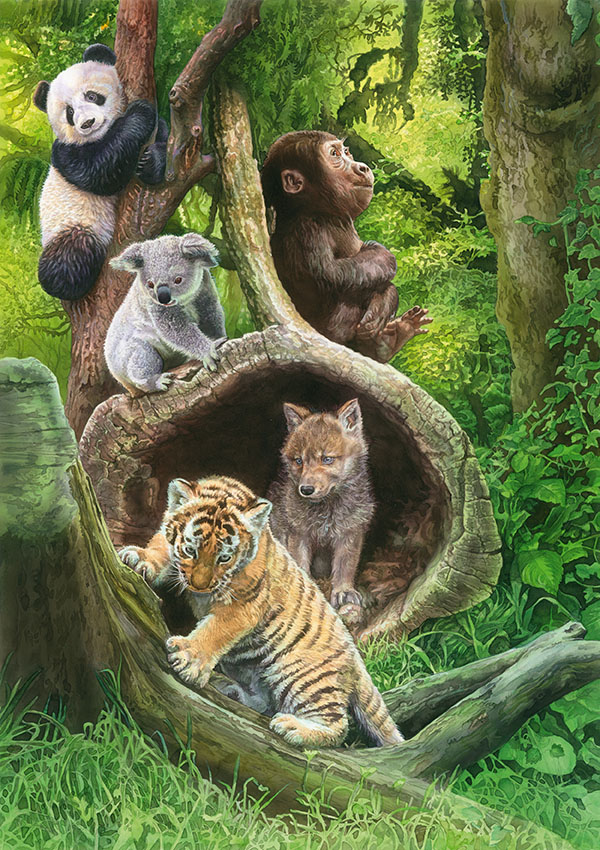
FATRO calendar 2017
FATRO, still young but with 70 years of experienceToday, more than ever, keeping resolutely to the same road signposted by the founder of FATRO, Dr. Corrado Zaini, with the same entrepreneurial energy and enthusiasm and with the same desire to grow and become great together, we develop and produce drugs and vaccines with full regard for the environment and the need to safeguard animal health and, with it, your health. Of these 70 years, the last 30 have been ticked off, day by day, on our FATRO calendar, a much-appreciated and valued must-have, which has always been with us and, we trust, will still be with us for many years to come, so we can become still greater together. DOWNLOAD PDF
Read more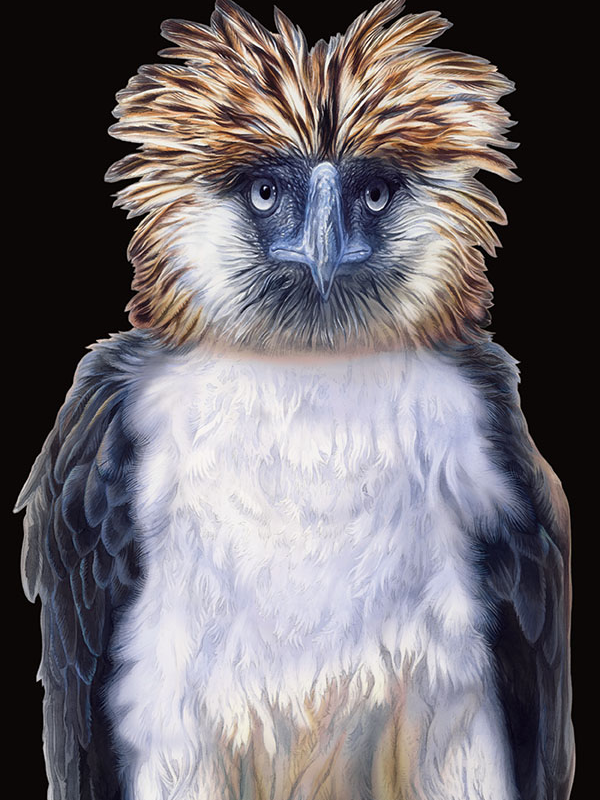
FATRO calendar 2016
ENDANGERED SPECIES Pithecophaga jefferyi FATRO “WILDLIFE” COLLECTIONThe Philippine eagle, known also as the "monkey-eating eagle", is a bird of prey of the Accipitridae family, endemic to forests in the Philippines. It is considered one of the largest eagles in the world, with a length varying between 86 and 102 cm, a weight between 4.7 and the 8 kg and a wingspan of 2 metres, on average. The long feathers of the head and the back of the neck are a distinctive feature which almost form a crest. In 1995, it was declared the national bird of the Philippines. It is an endangered species, mainly due to a massive loss of habitat, due to deforestation. DOWNLOAD PDF
Read more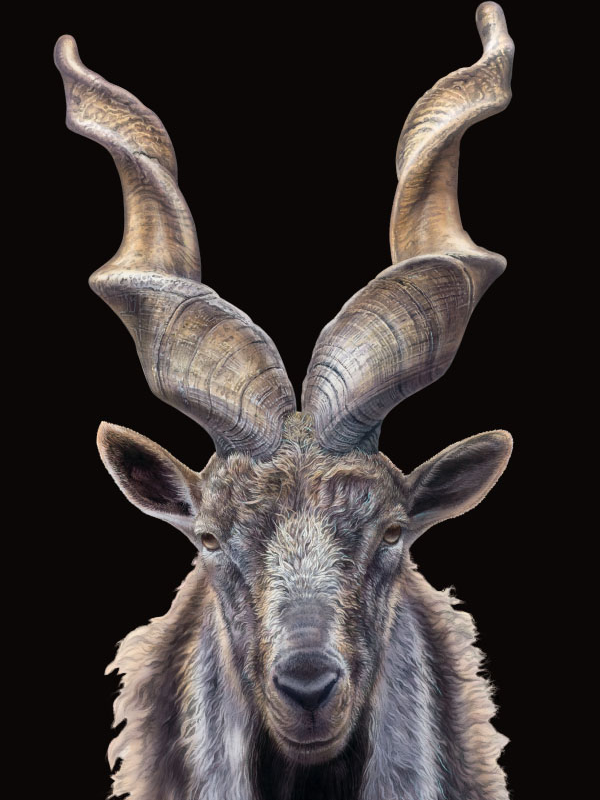
FATRO calendar 2015
ENDANGERED SPECIES Capra falconeri FATRO “WILDLIFE” COLLECTIONThe markhor (Capra falconeri) is a large species of wild goat, widespread in north-eastern Afghanistan, Pakistan, India and in the southern regions of Tajikistan and Uzbekistan.The species is considered to be endangered, as fewer than 2500 animals remain, a number which is still declining. It is the national animal of Pakistan. DOWNLOAD PDF
Read more